Thursday, June 30, 2022

How to Disinfect the Carpet

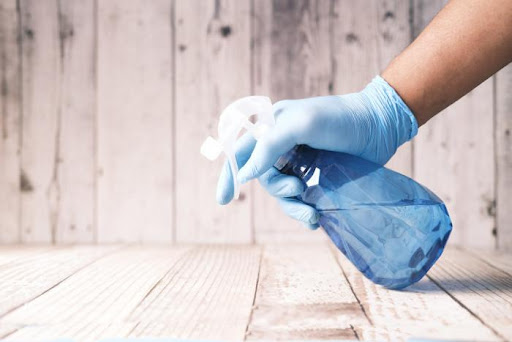
Carpet is often one of the most used surfaces in a home, and it can quickly become stained and matted. In addition, carpets can be a breeding ground for bacteria and other germs. To keep your carpet looking its best and to help protect your family’s health, it’s important to disinfect it regularly. Here are some tips for disinfecting your carpet:
How to Disinfect the Carpet

What to do first before cleaning the carpet?

There is a difference between sanitizing, disinfecting, and cleaning. The terms ​disinfecting​ and ​sanitizing​ are commonly used interchangeably, but they are not the same. It is actually impossible to disinfect soft materials such as carpet as this requires killing all the microorganisms found within the carpet, which can’t be done. So the best method for renewing your carpet is to clean first and then sanitize.

Cleaning the carpet first removes dirt and debris from your carpet, which will allow you to move ahead with proper sanitizing. Sanitizing is simply bringing the carpet back to a safe state that is suitable for people to be around. To clean your carpet, use either a vacuum or a stiff-bristle broom depending on the density and composition of your carpet fibers. If vacuuming, use the appropriate attachment to get as much dirt as possible out of the fibers. Source: Hunker

What are the steps to disinfect your carpet?

  1. Mix a solution of vinegar and water. If no ratios are given for the machine, you can use one part vinegar to one part water. For severe cases, use full strength vinegar. If soap-to-water ratios are given, replace the portion of soap with vinegar.
  2. Fill the detergent vessel of the steam cleaner with the solution. Do not overfill.
  3. Run the steam cleaner over the carpets, following directions for the machine.
  4. Allow the carpet to dry before use and traffic resumes. It works well to clean the carpets in the evening before going to bed so they can dry through the night. The vinegar smell will dissipate once the carpet dries. Source: HowToCleanStuff

How often should you clean your carpet?

Disinfecting a carpet is a bit variable. You should be vacuuming the carpet several times a week to remove loose dirt and pathogens. It’s also important to deep clean carpets every three to six months to get rid of bacteria build-up. You would typically sanitize during this time. Most importantly, however, you want to sanitize your carpet every time someone in your home is ill with an infectious disease, such as the flu or COVID-19. Source: Cleaning.LoveToKnow

Do you need help on keeping your carpet clean? Give us a call, and we’ll take care of it!

The post How to Disinfect the Carpet appeared first on Curlys Carpet Repair.


from Curlys Carpet Repair https://ift.tt/ETs7Pp6

Friday, June 24, 2022

How to Get Carpet Wrinkles Out Without a Stretcher

Is your carpet looking a little less inviting lately? There might be some wrinkles in it! In this article, you’ll discover a quick fix to this pesky problem.

How to Get Carpet Wrinkles Out Without a Stretcher

What causes the wrinkles

Wall to wall carpeting may develop wrinkles early on because of poor installation practices. The carpet may have not been stretched properly in the first place or attached correctly to the perimeter tack strips.

As time goes on, even well-installed carpeting can develop wrinkles. Carpeting often comes loose from the tack strips or the tack strips can detach from the flooring. Also, carpeting will stretch out due to repeated foot traffic over the years or from pushing heavy objects, such as sofas, across it. Source: TheSpruce

How to get wrinkles out without stretcher

If you do not have a carpet kicker, you can use your own feet to stretch the carpet. It is not difficult and can actually be somewhat entertaining.

  1. First, get all of the furniture out of the room.
  2. Pull up the carpet with pliers, starting in one corner of the room.
  3. Remove the carpet from the tack strips working from wall to wall.
  4. Replace damaged tack strips as you work if they are bent.
  5. Start at one end of the room, stand about a foot from the wall, and jump forward with both your feet, letting the carpet slide into the wall.
  6. The carpet should move at least 3″. Try again if it did not move until it does.
  7. Tack the carpet in place where it moved.
  8. Repeat these steps until you the carpet is stretched to your liking.
  9. Trim the excess carpet from the edges and tuck the carpet between the floor and the wall. Source: UpgradedHome

How to tell if carpet has been stretched enough

Wrinkles and creases in the surface of the carpet are a big indicator of the carpet needing to be stretched. If no wrinkles are present, a simple way to test would be to try and lift the carpet from the center of the room.

Using your fingers, grab the pile, and try to lift the carpet. If it won’t lift very far, that’s a good indication that it is adequately stretched. When you let go of the carpet, observe how quickly the carpet goes back into place. If it snaps back down, it is nice and tight and doesn’t need stretching. If it floats slowly back down, this indicates a need for stretching. Source: HomeDecorBliss

Need help with any carpet-related problems? Give us a call and get a free estimate.

The post How to Get Carpet Wrinkles Out Without a Stretcher appeared first on Curlys Carpet Repair.


from Curlys Carpet Repair https://ift.tt/6JdKbfj

Wednesday, June 15, 2022

Benefits of Using Large Format Tiles

When it comes to flooring, there are a lot of options to choose from. If you’re looking for something that’s durable and low-maintenance, large format tiles may be the way to go.

Benefits of Using Large Format Tiles

What are large-format tiles?

Large-format tiles offer a clean, sleek, modern aesthetic, but they can also work well with traditional decor. They are available in a variety of materials, including natural stone, glass and porcelain. Thanks to advances in digital printing, porcelain tiles can be made to look like natural stone, concrete, metal, wood and even fabric.

sign Life Better

Large-format tiles can be installed on both walls and floors. When used on a wall, they can be a durable alternative to paint or wallpaper. There’s no repainting or worrying about staining the wallpaper in your future. Since it’s tile, you can just wipe it clean.

Tiles are considered large format when one edge is greater than 15 inches. In the past, 12-by-24-inch rectangular tiles were the most popular large-format size. Today, 18 by 36 inches is common, though, thanks to new technology, tiles are being manufactured as large as 5 by 10 feet. Source: Houzz

Benefits

Visual appeal

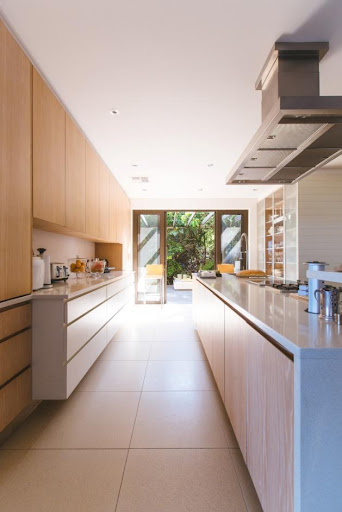
Larger tiles have fewer grout lines, thereby offering a smooth and visually appealing surface. Almost any room will look more open and expansive with large-format floor tiles.

Longer rectangular tiles will draw the eye toward the more distant parts of a room and create the illusion of more space. While it is only an illusion, the psychological effect can be profound.

The benefits of a large-format tile layout are particularly palpable in small spaces like bathrooms or efficiency apartments that often make people feel claustrophobic. Having large-format tiles in showers also helps in this regard.

Large-format tiles can enhance a larger room or open floor plan. But smaller tiles, with their many grout lines, sometimes crowd the area — even if it’s otherwise uncluttered. Source: Rubi

Minimal grout

Naturally, large tiles require fewer grout lines because the tile itself provides more coverage.

Easy maintenance

Fewer grout lines can result in a lower-maintenance wall or floor installation. Grout has a tendency to chip away or crack over time and minimizing those grout lines make it easier to maintain. Source: BuildDirect

Want to install large format tiles at home? Call us!

The post Benefits of Using Large Format Tiles appeared first on Curlys Carpet Repair.


from Curlys Carpet Repair https://ift.tt/Wyl40gx

Thursday, June 9, 2022

3 Reasons Why Tiles Break

Tile is a popular flooring option for kitchens and bathrooms because it’s durable and easy to clean. However, even the most durable materials can break over time. Let’s look at three common reasons why tiles break.

3 Reasons Why Tiles Break

Concrete substrate has cracked

It is not unusual for concrete basement floors, driveways, or patios to have a long crack or two running through them, especially if the concrete is several years old.

Even though concrete seems like the perfect substrate for tile, it carries its own, unique set of problems. When the concrete substrate cracks, this movement is transmitted to the tile above in the form of a reflective crack. If the tile cracks are long, continuous, and extending across multiple tiles, the concrete below has likely cracked.

The only wholesale cure is to strip the tile and then install a crack isolation membrane before installing tile again. These membranes are designed to uncouple the tile from the concrete substrate, allowing the tile to move separately from the concrete. Source: TheSpruce

Inadequate mortar

Ceramic floor tiles, especially larger tiles, need an even distribution of mortar underneath them. Voids in the mortar under the tile allow the tile to flex and crack. As a general rule, tiles larger than 12×12 inches should have mortar applied to the back of the tile as well as the floor to help ensure adequate coverage. Source: HomeSteady

Concrete didn’t cure long enough

When you lay concrete, it’s a good idea to leave it for a good while and let it cure, or harden. And when we say a good while, we mean a month or so. Otherwise, the water in the concrete will evaporate, causing the concrete to shrink. If the tile has been laid on top of concrete that’s shrinking, you’ll start seeing a lot of cracks as they try to keep up. Source: HomeDecorBliss

Are there any broken tiles in your home? No problem! Give us a call to get them fixed in no time.

The post 3 Reasons Why Tiles Break appeared first on Curlys Carpet Repair.


from Curlys Carpet Repair https://ift.tt/NrUeVyA

Thursday, May 26, 2022

How to Get Bleach Stains Out of Carpet

If you’ve ever accidentally spilled bleach on your carpet, you’ll know how difficult it can be to remove the stains. In this blog post, we’ll show you how to get bleach stains out of your carpet using a few simple steps.

How to Get Bleach Stains Out of Carpet

Dye the carpet

  1. Blot the area with paper towels to remove any liquid bleach.
  2. Rinse the bleach stain, using a sponge and warm water. Take care not to soak the area with water, as it will need to dry before you proceed.
  3. Cut some carpet fibers from a hidden area of the floor, such as a closet. This will be your sample so you can match the color. Tape them to a white piece of cardboard or index card.
  4. Purchase several small bottles of acrylic paint (the kind used for craft projects). Choose the color that best matches your carpet and also purchase a few bottles a shade lighter and a shade darker.
  5. Test the colors you purchased by painting a small block of each color onto the outside edge of an index card, marking each block with the name or number of the corresponding paint. Allow to dry.
  6. Lay the index card onto the carpeted area and decide which color matches the floor. You may need to make another trip to the store if none of the test colors match.
  7. Paint the bleach-stained carpets with the perfect matching color, using a cotton swab and coloring each carpet fiber individually. Allow to air dry and then examine the area for any fibers you may need to touch up. Source: HomeGuides.SFGate

Additional tips

  • Never scrub it. By “scrubbing,” I am referring to an up-and-down/side-to-side motion. All you will do is damage it more. You run the risk of literally ripping the carpet out and turning it into a giant hole.
  • Second, bleach is not a color. Bleach is a color-stripper or solvent that removes the tint by basically eating it away. With that in mind, you can’t “remove bleach,” just like you can’t put nail polish remover onto your polish and then expect the polish to re-appear. Source: DenGarden 

Leave it to the pros

Ask a professional for help if you’ve tried using crayons or paint without success, or if you don’t want to take the chance recoloring the stain on your own. A professional cleaner can attempt to:[7]

  • Clean the stain
  • Cut out fibers
  • Cut out and replace the affected patch Source: WikiHow

Need someone who can handle your carpet problems quickly and effectively? Call us today!

The post How to Get Bleach Stains Out of Carpet appeared first on Curlys Carpet Repair.


from Curlys Carpet Repair https://ift.tt/uRIveOo

Friday, May 13, 2022

Common Laminate Flooring Problems

If you’re a homeowner, then you know that laminate flooring is a popular choice because it’s affordable and easy to install. However, even the best products can occasionally experience problems. In this blog post, we’ll take a look at some of the most common issues that homeowners experience with laminate flooring, and we’ll offer some tips on how to address them.

Common Laminate Flooring Problems

Scratches

Scratches can be repaired without removing boards. If you have small children or pets you may want to keep a laminate floor repair kit on hand. Most repair kits come with a paste, a few pigments to match your color, and a spatula or putty knife. Just follow the directions on the kit to cover up the scratch. Source: DoItYourself

Warping and peaking

Extensive floor damage requires more involved repairs, often by replacing damaged planks and tiles and installing new ones. Before attempting the repair or having a contractor do it, it is important to determine why the laminate floor board is damaged in the first place and correct the problem.

Some common problems include warping and peaking. Warping means conditions forcing the plank to twist so that it is no longer flat. Peaking means planks that are side by side pressed into one another, forming a peak.

Sometimes, faulty floor installation is to blame for peaking or warping. Laminate floors are floating floors, which means the planks or tiles are attached to one another but nothing else. They are not nailed to the subfloor nor the baseboards around the perimeter of the room. There should be a 1/4-inch to 3/8-inch gap between the flooring and the walls of the room. If there isn’t, expansion and contraction of the planks can lead to damage. Source: Hunker

Small damages

Repair laminate flooring as these small problems crop up to keep the planks in the best condition possible. If the floors seem damaged beyond what you feel is your ability to handle, don’t hesitate to call a professional to come take a look. Small damage can sometimes spread to become a bigger problem, so tackling these issues head on is the best approach to a long lasting, beautiful floor. Source: HomeImprovement.LoveToKnow

Is your laminate flooring chipped? Don’t worry! Give us a call so we can help.

The post Common Laminate Flooring Problems appeared first on Curlys Carpet Repair.


from Curlys Carpet Repair https://ift.tt/Ac3do6W

Thursday, May 5, 2022

Bring Old Carpet Back To Life With These Tips

If your old carpet is starting to look a bit tired, don’t worry – there are some simple things you can do to bring it back to life. By following these tips, you can make your carpets look like new again and extend their lifespan. 

Bring Old Carpet Back To Life With These Tips

Clean using baking soda and salt

Vacuum the carpet and sprinkle it liberally with a one-to-one mixture of baking soda and table salt. Spritz the sprinkled area with plain water from a spray bottle and use a nylon-bristled scrub brush to work the mixture into the fibers.

Blot away the loosened soil with old towels and let the carpet air dry. Vacuum well to remove any remaining baking soda and salt and to lift the fibers. Source: TheSpruce

Use a blow dryer

For the blow-drying method of fluffing your carpet, you will first need to fill a clean spray bottle with warm water. Be sure to use warm water and not extremely hot water as it can be damaging to the fibers of your carpet.

You then need to spray the flat and areas of your carpet with the water, taking extra care to cover the flat and areas and the ones that are dented from furniture or other heavy objects that have been sitting on it for a period of time. Do not spray too much water to the point of completely saturating the area because that can end up causing damage to your carpet in the long run but make sure it’s dampened.

Now, it is time to blow dry the areas of your carpet that you have dampened with the normal blow dryer that you use to dry your hair. Simply plug it in near the area of carpet you need to work on and make sure it is on the lowest heat setting. It is okay to have the fan setting on high if your blow dryer offers that option. Source: HomeStratosphere

Don’t let your pile get damaged 

It’s possible to prevent damage to your pile in several ways.

First, make sure to regularly move or even slightly shift your furniture. A few inches in either direction can minimize carpet divot damage.

You can also use area rugs in high-traffic areas to take the brunt of foot traffic.

Installing high-quality carpet with a dense pile also helps prevent this kind of damage, as it will better resist divots and wear over time. Source: Angi

Is your carpet stained, matted, or just plain outdated? We can help make it look brand new. Give us a call for a free estimate!

The post Bring Old Carpet Back To Life With These Tips appeared first on Curlys Carpet Repair.


from Curlys Carpet Repair https://ift.tt/J98ltCK