Thursday, July 21, 2022

Carpet Recycling FAQs

When you’re ready to get a new carpet, it’s important to know what to do with your old one. Here are some of the most common questions people ask about carpet recycling.

Carpet Recycling FAQs

What is the process of recycling carpet?

Carpet recycling centers work to harvest the valuable material from old carpets and create new, repurposed material.

The carpet recycling process begins with identifying and separating material. To separate the layers of carpet, they are sometimes sent through a machine that cleans, shreds, shears, and separates the material.

This newly separated material can then be reused in the production of new carpets. Source: Rubicon

Is it possible to recycle carpet and carpet padding together?

Many companies that recycle carpet also take carpet padding. Carpet padding is recycled separately from carpet, however, so it’s best to double-check that both are accepted by the program you choose to use to recycle your carpet.

What happens to carpet when it is recycled?

Recycled carpet is typically turned back into plastic resin that can be used to make a range of products for industries including: automotive, transportation, construction, and home and garden.

Is old carpet recycled when it is replaced by a flooring company?

Although the carpet industry has pledged to recycle and recover more, whether or not your flooring company will recycle is dependent on your local area and their internal resources. When you’re getting ready to purchase new carpeting, ask about removal options. Source: Earth911

How can carpet be reused?

As long as the carpet is clean, you can reuse it. After you remove old carpet from one room, you can actually install it in another room in your house if desired. This is a great option if you’re removing carpet from a low-traffic room.

You can also reuse carpet in various DIYs and crafts. If you have a number of carpet scraps, for example, you can sew them together to make a decorative rug or a kitchen mat. Some other ideas for reusing carpet scraps include:

  • Cat scratching toy
  • Kitchen mat using carpet scraps
  • DIY rug
  • Welcome mat for your front door
  • Padding under exercise equipment
  • Area rugs
  • Car mats Source: TreeHugger

Want to replace your old carpet with a new one? We can help! Call us.

The post Carpet Recycling FAQs appeared first on Curlys Carpet Repair.


from Curlys Carpet Repair https://ift.tt/IvuZTNL

Friday, July 15, 2022

Getting Started with Quarry Tiles

Are you considering installing quarry tiles in your home? If so, you’re in for a treat. Quarry tiles are beautiful, versatile, and durable. Read more about them below.

Getting Started with Quarry Tiles

What is a quarry tile?

Quarry tile is a type of unglazed tile which is known for being inexpensive, very durable, and natural. This type of tile is often used in industrial settings, but it is also appropriate for homes as well. This tile comes in a range of shades which can pair well with a wide variety of design schemes; many flooring suppliers carry quarry tile and they are happy to provide interested customers with samples of the products they stock. Source: Wise-Geek

How is it made?

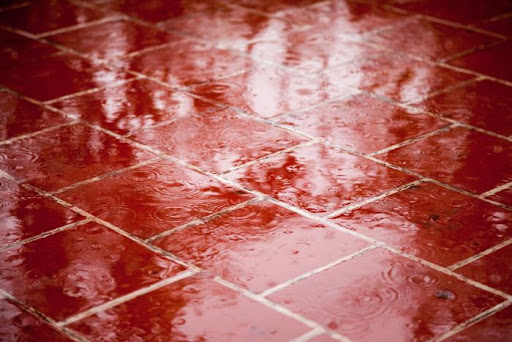
Quarry tiles are made of red clay that is either hand- or machine-shaped. The quarry tiles are dried before being fired in large beehive-style kilns. The clay is fired to extremely high temperatures — much higher than ceramic tiles — which renders the quarry tiles naturally dense, nonporous and water resistant with a low water absorption rate.

While quarry tiles can be glazed, most are left in their natural finish, or unglazed. The tiles can be arranged in various areas of the kilns to produce a variety of colors, ranging from tan to dark brown, as well as markings known as “iron-spots” and “flashed” tiles. The quarry tiles may be sorted after firing for color, or they may be left mixed for variation. Source: Hunker

Where to use?

Quarry tile doesn’t belong everywhere. Due to its unique surface and color characteristics, you may want to limit your installation to these types of areas:

  • Main interior floor areas: Some examples of main interiors where quarry tiles work well are living rooms, dining rooms, and kitchens. Homes that have quarry tiles in main living areas typically use area rugs to soften the tiles and soften sounds within the room.
  • Interior or exterior walkways and entryways: Because of quarry tile’s high degree of slip resistance, it works well for any area where people need to walk without slipping. It’s also very durable and stands up to traffic well.
  • Backsplashes: Despite the name, backsplashes typically do not receive much in the way of splashes from sinks. Thus, unglazed quarry tile can work well for backsplashes. One notable exception would be backsplashes near stoves, where stains from cooking grease and food may be a problem. Even so, quarry tiles can be installed near high-grease areas if it is sealed.
  • Some countertops: Heavily-used kitchen and bathroom countertops should not be tiled with quarry tile. However, side counters that are not areas for food preparation can be tiled in quarry tile. Source: TheSpruce

Have existing damaged tiles at home that need replacement? Save thousands of dollars by letting us fix them instead. Give us a call to know more.

The post Getting Started with Quarry Tiles appeared first on Curlys Carpet Repair.


from Curlys Carpet Repair https://ift.tt/VJGr9wp

Thursday, July 7, 2022

Which One Is Best for You: Solid or Engineered Hardwood Flooring?

Planning to install hardwood floors but don’t know which type is best for you? That depends on your needs and budget. Here’s a closer look at the differences between solid and engineered hardwood flooring.

Which One Is Best for You: Solid or Engineered Hardwood Flooring?

Appearance

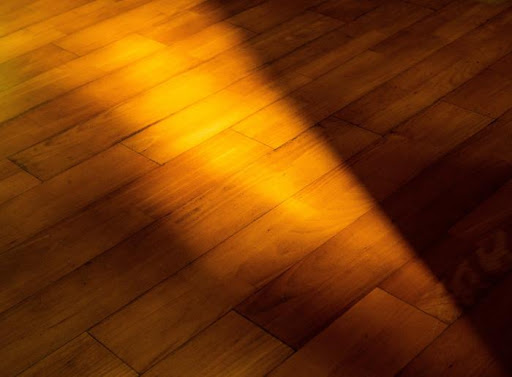
Contrary to popular belief, engineered wood is not “fake” wood. It just uses less hardwood than solid wood flooring does. Whereas hardwood flooring is made of a solid piece of wood, engineered planks employ only a veneer of real hardwood. (This sets engineered wood apart from laminate flooring, which only uses a photographic layer for its veneer, and bamboo flooring, which actually contains no hardwood.) The colors, grains, and textures of hardwood and engineered wood vary widely, from darker ebony and rosewood, to lighter oak and birch, and from dark stains to light stains. Furthermore, most solid hardwood floors can be sanded and refinished with a new wood stain multiple times throughout its use.

Differences between the two types of flooring are more apparent when handling the raw materials. Hardwood planks tend to be heavier and thicker as a single plank of wood. Engineered planks are made up of two or more bonded layers of derivative wood products and are usually lighter and thinner. Source: Diffen

Lifespan

Although engineered and solid hardwood flooring stand up to typical wear and tear, engineered planks will have a significantly shorter lifespan than solid hardwood. Since solid hardwood can be sanded and refinished many times, Yahoodain says it can last up to 100 years.

The thin veneer of engineered hardwood can only be refinished once or twice, so it will last between 20 and 40 years. Your floor’s lifespan will vary depending on your household and the type and frequency of foot traffic. Source: FamilyHandyman

Installation

Solid Hardwood

Solid hardwood flooring is installed with a tongue-and-groove system, in which each board is blind-nailed to the subfloor down through tongues at the edges of the boards.

Engineered Hardwood

Some engineered wood flooring is also installed with the same nail-down methods used for solid hardwood, but there are also forms with “click-lock” edges that can be installed as a “floating floor.” Engineered wood flooring can also be glued down against a concrete subfloor. Most DIYers find engineered wood flooring to be easier to install. Source: TheSpruce

Need help with hardwood chip repairs? Give us a call and get a free estimate!

The post Which One Is Best for You: Solid or Engineered Hardwood Flooring? appeared first on Curlys Carpet Repair.


from Curlys Carpet Repair https://ift.tt/YrGEk6L

Thursday, June 30, 2022

How to Disinfect the Carpet

Carpet is often one of the most used surfaces in a home, and it can quickly become stained and matted. In addition, carpets can be a breeding ground for bacteria and other germs. To keep your carpet looking its best and to help protect your family’s health, it’s important to disinfect it regularly. Here are some tips for disinfecting your carpet:

How to Disinfect the Carpet

What to do first before cleaning the carpet?

There is a difference between sanitizing, disinfecting, and cleaning. The terms ​disinfecting​ and ​sanitizing​ are commonly used interchangeably, but they are not the same. It is actually impossible to disinfect soft materials such as carpet as this requires killing all the microorganisms found within the carpet, which can’t be done. So the best method for renewing your carpet is to clean first and then sanitize.

Cleaning the carpet first removes dirt and debris from your carpet, which will allow you to move ahead with proper sanitizing. Sanitizing is simply bringing the carpet back to a safe state that is suitable for people to be around. To clean your carpet, use either a vacuum or a stiff-bristle broom depending on the density and composition of your carpet fibers. If vacuuming, use the appropriate attachment to get as much dirt as possible out of the fibers. Source: Hunker

What are the steps to disinfect your carpet?

  1. Mix a solution of vinegar and water. If no ratios are given for the machine, you can use one part vinegar to one part water. For severe cases, use full strength vinegar. If soap-to-water ratios are given, replace the portion of soap with vinegar.
  2. Fill the detergent vessel of the steam cleaner with the solution. Do not overfill.
  3. Run the steam cleaner over the carpets, following directions for the machine.
  4. Allow the carpet to dry before use and traffic resumes. It works well to clean the carpets in the evening before going to bed so they can dry through the night. The vinegar smell will dissipate once the carpet dries. Source: HowToCleanStuff

How often should you clean your carpet?

Disinfecting a carpet is a bit variable. You should be vacuuming the carpet several times a week to remove loose dirt and pathogens. It’s also important to deep clean carpets every three to six months to get rid of bacteria build-up. You would typically sanitize during this time. Most importantly, however, you want to sanitize your carpet every time someone in your home is ill with an infectious disease, such as the flu or COVID-19. Source: Cleaning.LoveToKnow

Do you need help on keeping your carpet clean? Give us a call, and we’ll take care of it!

The post How to Disinfect the Carpet appeared first on Curlys Carpet Repair.


from Curlys Carpet Repair https://ift.tt/ETs7Pp6

Friday, June 24, 2022

How to Get Carpet Wrinkles Out Without a Stretcher

Is your carpet looking a little less inviting lately? There might be some wrinkles in it! In this article, you’ll discover a quick fix to this pesky problem.

How to Get Carpet Wrinkles Out Without a Stretcher

What causes the wrinkles

Wall to wall carpeting may develop wrinkles early on because of poor installation practices. The carpet may have not been stretched properly in the first place or attached correctly to the perimeter tack strips.

As time goes on, even well-installed carpeting can develop wrinkles. Carpeting often comes loose from the tack strips or the tack strips can detach from the flooring. Also, carpeting will stretch out due to repeated foot traffic over the years or from pushing heavy objects, such as sofas, across it. Source: TheSpruce

How to get wrinkles out without stretcher

If you do not have a carpet kicker, you can use your own feet to stretch the carpet. It is not difficult and can actually be somewhat entertaining.

  1. First, get all of the furniture out of the room.
  2. Pull up the carpet with pliers, starting in one corner of the room.
  3. Remove the carpet from the tack strips working from wall to wall.
  4. Replace damaged tack strips as you work if they are bent.
  5. Start at one end of the room, stand about a foot from the wall, and jump forward with both your feet, letting the carpet slide into the wall.
  6. The carpet should move at least 3″. Try again if it did not move until it does.
  7. Tack the carpet in place where it moved.
  8. Repeat these steps until you the carpet is stretched to your liking.
  9. Trim the excess carpet from the edges and tuck the carpet between the floor and the wall. Source: UpgradedHome

How to tell if carpet has been stretched enough

Wrinkles and creases in the surface of the carpet are a big indicator of the carpet needing to be stretched. If no wrinkles are present, a simple way to test would be to try and lift the carpet from the center of the room.

Using your fingers, grab the pile, and try to lift the carpet. If it won’t lift very far, that’s a good indication that it is adequately stretched. When you let go of the carpet, observe how quickly the carpet goes back into place. If it snaps back down, it is nice and tight and doesn’t need stretching. If it floats slowly back down, this indicates a need for stretching. Source: HomeDecorBliss

Need help with any carpet-related problems? Give us a call and get a free estimate.

The post How to Get Carpet Wrinkles Out Without a Stretcher appeared first on Curlys Carpet Repair.


from Curlys Carpet Repair https://ift.tt/6JdKbfj

Wednesday, June 15, 2022

Benefits of Using Large Format Tiles

When it comes to flooring, there are a lot of options to choose from. If you’re looking for something that’s durable and low-maintenance, large format tiles may be the way to go.

Benefits of Using Large Format Tiles

What are large-format tiles?

Large-format tiles offer a clean, sleek, modern aesthetic, but they can also work well with traditional decor. They are available in a variety of materials, including natural stone, glass and porcelain. Thanks to advances in digital printing, porcelain tiles can be made to look like natural stone, concrete, metal, wood and even fabric.

sign Life Better

Large-format tiles can be installed on both walls and floors. When used on a wall, they can be a durable alternative to paint or wallpaper. There’s no repainting or worrying about staining the wallpaper in your future. Since it’s tile, you can just wipe it clean.

Tiles are considered large format when one edge is greater than 15 inches. In the past, 12-by-24-inch rectangular tiles were the most popular large-format size. Today, 18 by 36 inches is common, though, thanks to new technology, tiles are being manufactured as large as 5 by 10 feet. Source: Houzz

Benefits

Visual appeal

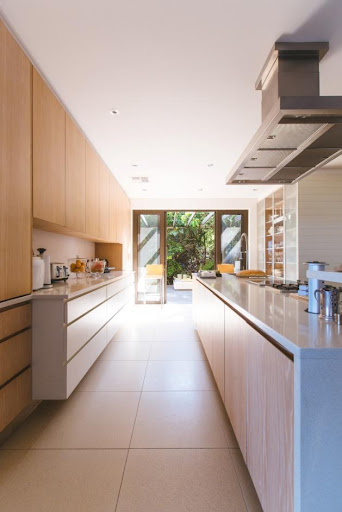
Larger tiles have fewer grout lines, thereby offering a smooth and visually appealing surface. Almost any room will look more open and expansive with large-format floor tiles.

Longer rectangular tiles will draw the eye toward the more distant parts of a room and create the illusion of more space. While it is only an illusion, the psychological effect can be profound.

The benefits of a large-format tile layout are particularly palpable in small spaces like bathrooms or efficiency apartments that often make people feel claustrophobic. Having large-format tiles in showers also helps in this regard.

Large-format tiles can enhance a larger room or open floor plan. But smaller tiles, with their many grout lines, sometimes crowd the area — even if it’s otherwise uncluttered. Source: Rubi

Minimal grout

Naturally, large tiles require fewer grout lines because the tile itself provides more coverage.

Easy maintenance

Fewer grout lines can result in a lower-maintenance wall or floor installation. Grout has a tendency to chip away or crack over time and minimizing those grout lines make it easier to maintain. Source: BuildDirect

Want to install large format tiles at home? Call us!

The post Benefits of Using Large Format Tiles appeared first on Curlys Carpet Repair.


from Curlys Carpet Repair https://ift.tt/Wyl40gx

Thursday, June 9, 2022

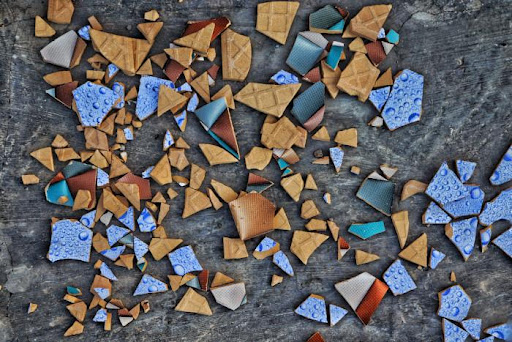
3 Reasons Why Tiles Break

Tile is a popular flooring option for kitchens and bathrooms because it’s durable and easy to clean. However, even the most durable materials can break over time. Let’s look at three common reasons why tiles break.

3 Reasons Why Tiles Break

Concrete substrate has cracked

It is not unusual for concrete basement floors, driveways, or patios to have a long crack or two running through them, especially if the concrete is several years old.

Even though concrete seems like the perfect substrate for tile, it carries its own, unique set of problems. When the concrete substrate cracks, this movement is transmitted to the tile above in the form of a reflective crack. If the tile cracks are long, continuous, and extending across multiple tiles, the concrete below has likely cracked.

The only wholesale cure is to strip the tile and then install a crack isolation membrane before installing tile again. These membranes are designed to uncouple the tile from the concrete substrate, allowing the tile to move separately from the concrete. Source: TheSpruce

Inadequate mortar

Ceramic floor tiles, especially larger tiles, need an even distribution of mortar underneath them. Voids in the mortar under the tile allow the tile to flex and crack. As a general rule, tiles larger than 12×12 inches should have mortar applied to the back of the tile as well as the floor to help ensure adequate coverage. Source: HomeSteady

Concrete didn’t cure long enough

When you lay concrete, it’s a good idea to leave it for a good while and let it cure, or harden. And when we say a good while, we mean a month or so. Otherwise, the water in the concrete will evaporate, causing the concrete to shrink. If the tile has been laid on top of concrete that’s shrinking, you’ll start seeing a lot of cracks as they try to keep up. Source: HomeDecorBliss

Are there any broken tiles in your home? No problem! Give us a call to get them fixed in no time.

The post 3 Reasons Why Tiles Break appeared first on Curlys Carpet Repair.


from Curlys Carpet Repair https://ift.tt/NrUeVyA